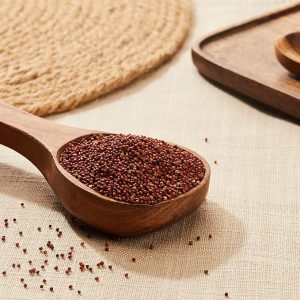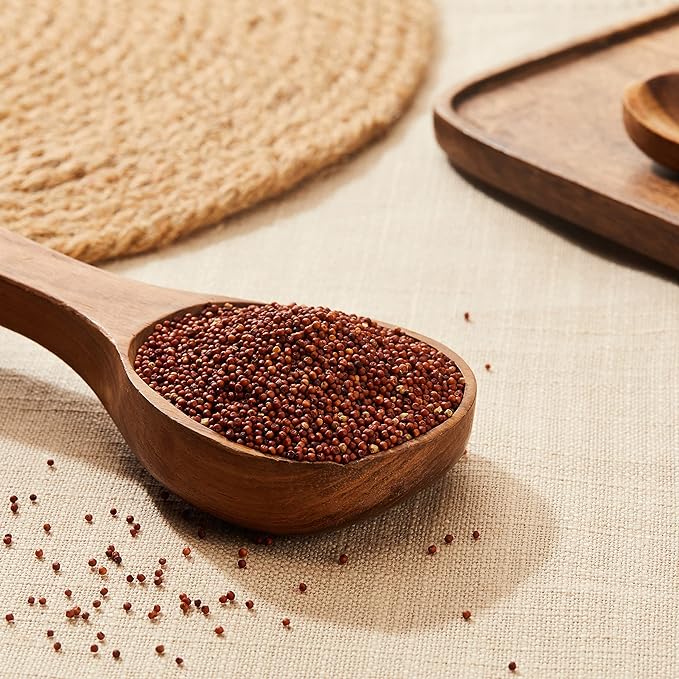
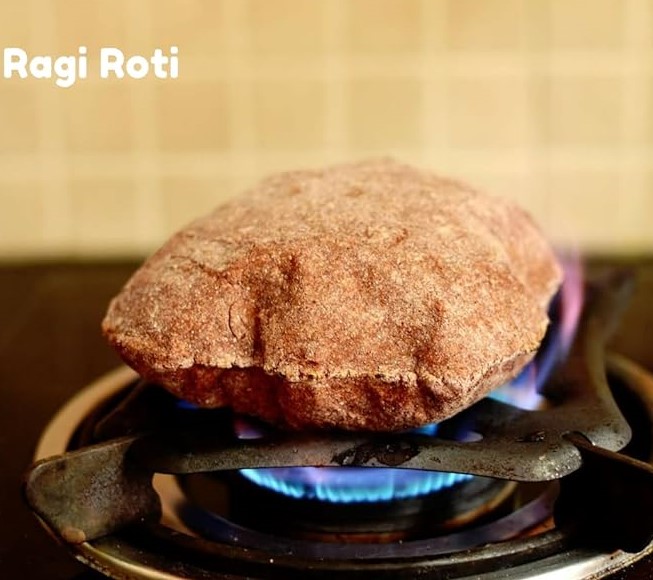
Unveiling the power of the ancient grain, Kedar Ganga’s Ragi aata flour bursts onto the scene as a nutritional powerhouse. Crafted from finely ground, de-stoned ragi whole grains, this gluten-free atta packs a punch with plant-based protein, calcium, iron, and a spectrum of minerals. But it doesn’t stop there! Ragi flour boasts a high fiber content, aiding digestion and keeping you feeling fuller for longer Are you wondering how to incorporate this wonder ingredient? It’s incredibly versatile! Whip up wholesome porridge, fluffy rotis, crispy dosas, or comforting puttu – endless possibilities. And the best part? Ragi’s gentle nature makes it perfect for babies, providing valuable nutrients for their development. So, embrace the goodness of ragi flour and unlock a world of delicious and healthy possibilities!
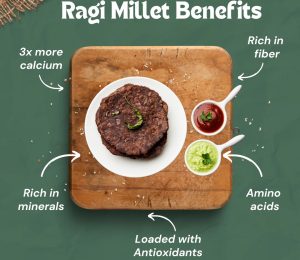
Bone Health: Rich in calcium (8x more than wheat!), it helps prevent osteoporosis and strengthens bones.
Digestive Aid: High in fiber (3x more than rice!), it promotes gut health, regulates digestion, and keeps you feeling fuller for longer.
Diabetes Management: Its low glycemic index and high fiber content make it ideal for managing blood sugar levels.
Anemia Prevention: Abundant iron (almost 3x more than rice!) combats iron deficiency and improves red blood cell production.
Heart Health: The presence of phytochemicals and antioxidants may help reduce bad cholesterol and improve heart health.
Gluten-Free: Perfect for those with gluten sensitivities or celiac disease. Additional Perks: Rich in minerals like magnesium, phosphorus, and B vitamins, it supports overall health, nervous system function, and energy levels.
Uttarakhand’s Uniqueness: Grown in the diverse Himalayan ecosystem, Finger Millet Flour from Uttarakhand might offer unique nutritional properties due to the distinct soil and climate conditions.
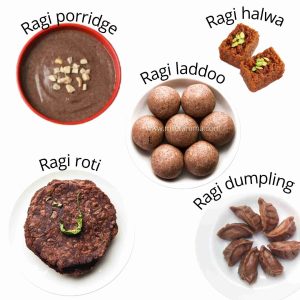
Staple Food:
Rotis: Mandua rotis are the most common usage. Traditionally, they’re made by mixing Mandua flour with wheat flour in varying proportions, resulting in brownish, earthy-flavored flatbreads. These are a staple food, especially during winter months.
Madua ki Roti: This is a special type of roti made entirely with Mandua flour, often consumed during festivals and celebrations.
Other Dishes:
Mandua ki Khichdi: A savory porridge made with Mandua flour, lentils, and vegetables.
Mandua Laddu: Sweet energy balls made with Mandua flour, jaggery, and nuts.
Mandua Halwa: A sweet pudding made with Mandua flour, ghee, sugar, and nuts.
Mandua Pancakes: Savory or sweet pancakes made with Mandua flour, a modern twist on traditional dishes.
Mandua flour is valued for its nutritional content: It’s gluten-free and rich in protein, fiber, calcium, iron, and other essential minerals.
Traditional cultivation: Mandua is traditionally grown in rain-fed conditions, making it a sustainable crop for the hilly terrains of Uttarakhand.
Modern uses: While traditionally used for staple dishes, Mandua flour is increasingly finding its way into modern recipes like cookies, cakes, and bakery products.
Nutritional Value per 100g:
Energy: 328-352 Kcal
Protein: 7.3-7.9 g
Carbohydrates: 72-76 g
Fiber: 2.6-3.5 g
Fat: 1.3-2.0 g
Calcium: 344mg (one of the highest sources among cereals)
Iron: 6.4mg
Potassium: 408mg
Vitamin A: Present
B Vitamins: B1, B2, B3, B6
Energy: 328-352 Kcal
Protein: 7.3-7.9 g
Carbohydrates: 72-76 g
Fiber: 2.6-3.5 g
Fat: 1.3-2.0 g
Calcium: 344mg (one of the highest sources among cereals)
Iron: 6.4mg
Potassium: 408mg
Vitamin A: Present
B Vitamins: B1, B2, B3, B6